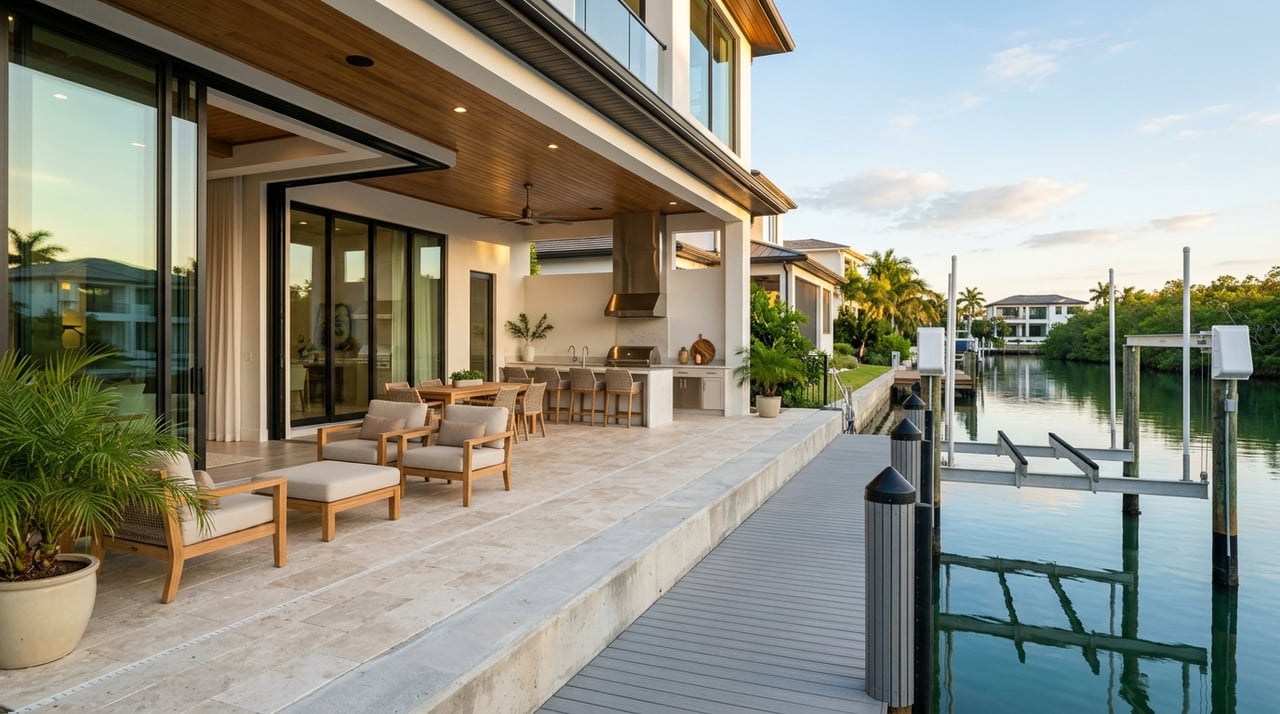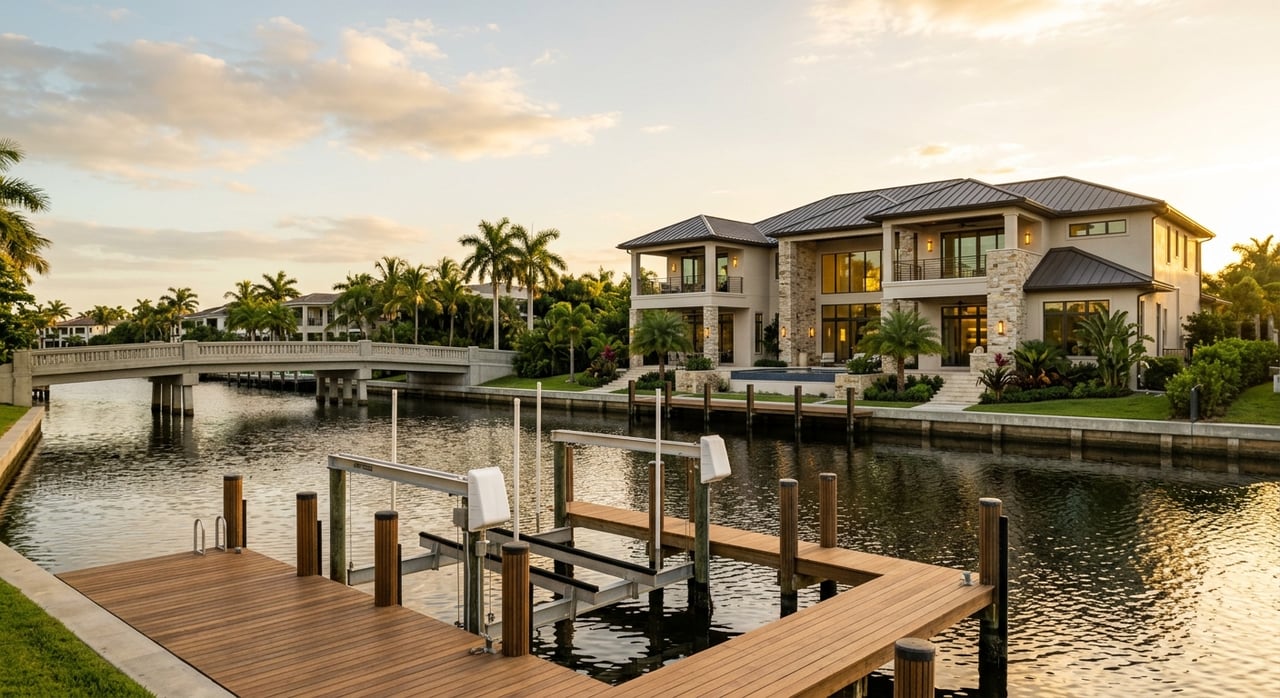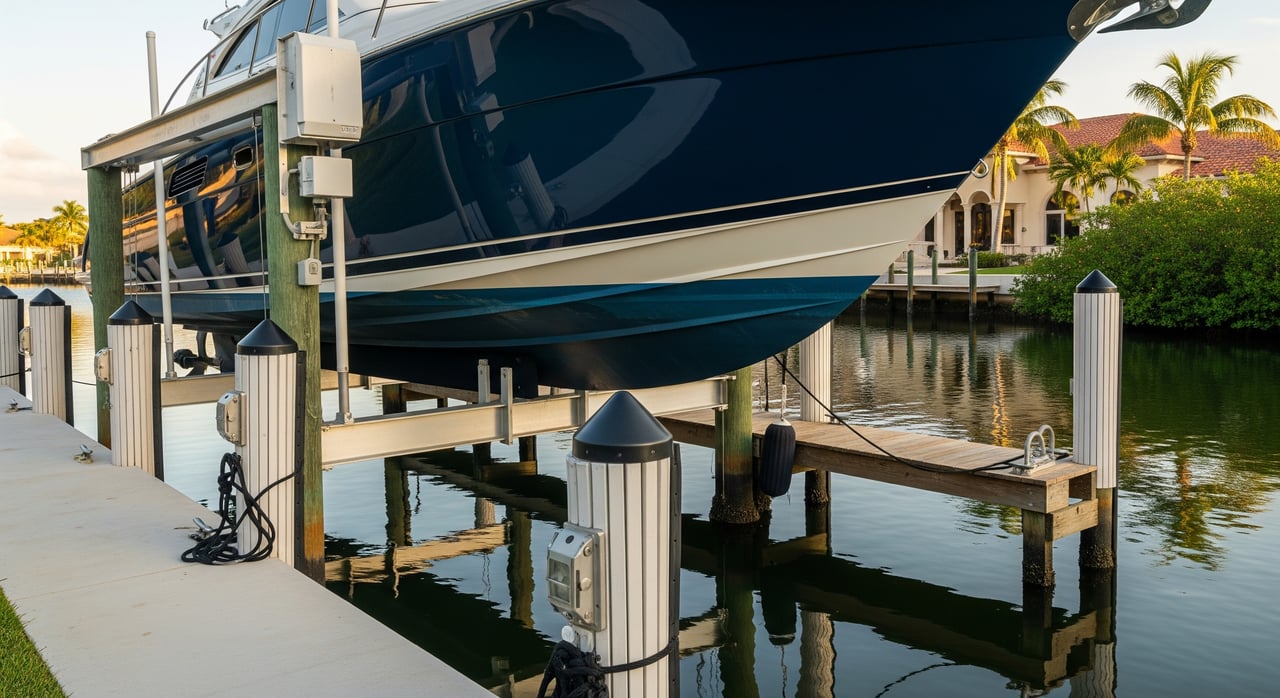
Thinking about a boat lift for your Estero waterfront home? With so many options, it is easy to pick the wrong setup for your boat or canal. You want a lift that fits your vessel, works with your dock, and meets local rules without surprises. In this guide, you will learn the major lift types, how to size them, what to know about Lee County permitting, and how to plan for storms and maintenance. Let’s dive in.
Boat lift types in Estero
Cradle lifts
Cradle, or bunk, lifts use angled bunks to support the hull as the lift raises the boat out of the water. They are practical and cost-effective for many center consoles, bay boats, and small cruisers when the bunks match the hull. Loading is smooth with a straight approach, especially in wider canals. In tight or narrow canals, aiming onto bunks can be trickier and may require practice.
Best for: Center consoles, bay boats, small cuddy cruisers. Good value when the approach is straight and water depth is consistent.
Elevator lifts
Elevator, or vertical, lifts raise a platform straight up and down. You store the boat on a platform or cradle, which can make boarding faster and keep the vessel higher above wakes. These systems work well in tight spaces and for variable hull shapes. They often cost more and can have taller profiles that catch wind, so factor in local height limits and aesthetics.
Best for: Frequent boaters who want quick access, higher clearance above wakes, or a tight canal footprint.
PWC lifts and small-platform lifts
These compact lifts fit jet skis and small flats boats. They can be manual or powered and are designed for easy loading in shallow water. They are affordable and space-efficient, though less robust in heavy surf or strong storm surge.
Best for: PWCs and small, shallow-draft boats where space and budget are priorities.
Platform and floating lifts
Floating platforms use pontoons or foam to support the boat and can reduce the need for heavy shore-mounted structures. Visual impact is often lower, and in some cases you can avoid drilling into the seabed. They can be more affected by wake action and are limited for very heavy or long vessels.
Best for: Sites where fixed framing is difficult or where a lower-profile look is preferred. Not ideal for large, heavy boats.
Specialty systems
Hydraulic systems deliver smoother, quieter operation and are common in higher-end elevator setups. Cable systems are more common on bunk lifts and are usually more affordable. In storm-prone areas like Estero, many owners choose removable or quick-release features so parts can be taken in before a hurricane.
Best for: Owners who prioritize quiet operation or want a removable setup for storm season.
Choose the right capacity and fit
Weight and safety margin
Start with the boat’s dry weight, then add fuel, water, gear, motors, and any aftermarket additions like a hardtop or tower. Choose a lift rated at least 20 to 25 percent above the fully loaded weight. This margin protects the lift from strain, leaves room for future upgrades, and improves reliability.
Beam, bunks, and support points
The bunks or platform must match your hull’s load-bearing areas. For wide-beam boats like pontoons or beamier center consoles, confirm the lift width, bunk spacing, and bunk length. Elevator and platform lifts often offer adjustable support, but correct setup is still critical to avoid hull damage.
Water depth and loading clearance
Every lift has a minimum water depth for safe loading and unloading. In Estero’s tidal canals, depth can change with tides, seasonal water levels, and canal shoaling. Measure at the lowest typical water level. Allow enough clearance for the prop and for maneuvering near the seawall, pilings, or neighbors’ docks.
Height above water and wake protection
Decide how high you want the boat stored above typical water. Higher storage helps reduce corrosion and wake slap, but increases visual profile and wind loading. In canals with frequent boat traffic, plan for extra clearance above mean high water to prevent chafing.
Materials and corrosion resistance
Saltwater is tough on metal. Look for hot-dipped galvanized frames, stainless fasteners, marine-grade coatings, and sacrificial anodes. Regular inspection and replacement of anodes is one of the most effective defenses against galvanic corrosion in Estero’s saltwater environment.
Estero site and permitting basics
Understand your waterway
Estero Bay and nearby tidal canals have modest day-to-day tidal ranges, but seasonal levels and storm surge can change water levels quickly. Canal depths vary and may include mud bottoms, siltation, and nearby seagrass or mangroves. The exact site conditions drive lift design, clearances, and permit requirements.
Who to contact about permits
Most projects require review by several agencies. Early planning helps you avoid delays.
- Lee County building and permitting for docks, lifts, and seawalls
- Florida Department of Environmental Protection for sovereign submerged lands and coastal work
- U.S. Army Corps of Engineers for activities in navigable waters
- Local municipalities or HOAs for community design and height rules
- Florida Fish and Wildlife Conservation Commission or regional agencies for seagrass and mangrove protections
Plan for lead times. Permits, environmental surveys, and any mitigation conditions can add weeks to months.
Environmental protections
Seagrass and mangroves are protected. Projects that impact submerged vegetation may require mitigation, relocation, or could be denied. Boat lifts usually have smaller footprints than boat houses, but you still need agency review if work touches state-owned submerged lands. Protect existing seawalls and drainage to avoid erosion issues.
Hurricane, storm, and insurance planning
Lee County is hurricane-prone, so your lift plan should include a storm strategy. Removable or quick-release components let you take parts in before a storm. Some systems include lock-down features or low-profile storm plates. Electrical hookups should have clear shutoffs and be elevated to meet code. Keep records of installation and maintenance, since many insurers want proof of proper setup and storm procedures.
Maintenance that extends lifespan
Routine checklist
- Inspect the structure for corrosion, cracked welds, loose bolts, or wood decay
- Check cables or straps, winches, gearboxes, and hydraulics for wear and proper tension
- Inspect motors, controls, and wiring for corrosion and grounding issues; confirm GFCI protection where required
- Check and replace sacrificial anodes as needed
- Rinse salt and debris with fresh water and remove marine growth on submerged parts
- Verify bunk alignment and tighten hardware to manufacturer specs
Common failure points
- Galvanic corrosion when anodes are missing or worn out
- Cable fraying or strap wear from UV and load cycles
- Electrical failures from water intrusion or corrosion
- Piling movement or footing shift after storm surge or wave action
Lifespan signals
With care, many galvanized lifts in saltwater last 15 to 30 years or more. Hydraulic and electrical components often need service sooner. Plan upgrades or replacement when structural corrosion appears, cables or bunks show extensive wear, or motors become unreliable.
Inspection rhythm
Do owner checks monthly and seasonally, and schedule a professional inspection at least once a year, especially before hurricane season. Keep a simple log of checks, fixes, and part replacements.
A simple decision checklist
- Confirm fully loaded boat weight and add a 20 to 25 percent capacity margin
- Measure beam, confirm bunk spacing and length, and match hull support points
- Survey water depth at the lowest typical tide and check maneuvering clearance
- Document overhead and side obstructions, canal width, and your dock layout
- Review HOA or community design rules for height and appearance
- Contact Lee County and applicable state or federal agencies for permits and timelines
- Get quotes from at least two licensed local installers and ask for references
- Set a hurricane plan for removal or lock-down and electrical shutoff
Mistakes to avoid
- Choosing capacity based on dry weight only; always use fully loaded weight
- Ignoring beam or hull support points, which can lead to hull damage
- Forgetting tidal swings or shoaling, which can block safe loading at low water
- Skipping permits or environmental review, which can lead to fines or removal
- Selecting the cheapest option without corrosion protection or proper footings
- Overlooking storm strategy and insurance requirements
Budget and timing notes
Lift costs vary with type, capacity, materials, piling or seawall work, electrical needs, and permitting or mitigation. Expect broad ranges and ask for itemized estimates so you can compare apples to apples. Build in time for agency reviews and any environmental surveys. If you want your lift ready before peak boating or hurricane season, start early.
Local help for lift-ready homes
Your lift choice should match your boat, your canal, and your dock. If you are buying or selling on Gulf-access canals in Estero or Lee County, it helps to evaluate lift feasibility during the real estate process. Sea Shep Real Estate focuses on waterfront living and can help you assess canal geometry, dock layout, clearance, and likely permit needs as part of your property search or sale strategy. When you want a lift-ready home or a smart plan to add one, connect with a local advisor who understands the lifestyle and the details.
If you want help finding or selling a waterfront property that fits your boating goals, reach out to Chuck Shepherd.
FAQs
What boat lift works best for center consoles in Estero?
- Most center consoles fit well on cradle lifts with properly spaced bunks, while elevator lifts can help in tight canals or when you want faster boarding.
How much capacity should my lift have for safety?
- Choose a lift rated at least 20 to 25 percent above your fully loaded boat weight to allow for fuel, gear, and future upgrades.
Do I need permits for a boat lift in Lee County?
- Yes, most projects require approvals from Lee County and may involve state or federal agencies, plus any HOA rules in your community.
How do tides and depth affect lift selection?
- You need enough water at the lowest typical tide to load and unload safely, plus room to maneuver near seawalls, pilings, and neighboring docks.
What materials hold up best in Estero’s saltwater?
- Hot-dipped galvanized frames with stainless fasteners, marine coatings, and well-maintained sacrificial anodes offer strong corrosion resistance.
How should I prepare my lift for hurricanes?
- Use removable or lock-down features, secure or remove loose parts, and shut off and protect electrical systems according to local codes and your plan.
How often should a lift be inspected?
- Do monthly and seasonal owner checks and schedule a professional inspection annually, especially before hurricane season.